
About alignment
“The language of alignment is everywhere. The practise is not.”
Zora Artis
What is alignment?
In an aligned organisation, everyone from the C-Suite to the frontline is united by:

Shared clarity
about where the organisation is going and how their work contributes.
“We know what we need to do and why.”

Shared accountability
for how the organisation delivers together.
“It’s up to us.”

Shared commitment
to their organisation, customers, and colleagues… even when things get hard.
“We’re all in this together.”
You can tell when you’re leading an aligned organisation. “You can see, feel and sense it: a clear connection between…
- Commitments made and results delivered
- Strategy and priorities, translating into day-to-day work
- The C-Suite, leaders and the frontline
- What people say, do and believe
- Internal culture and external reputation.

Strategic alignment matters, but…

An overwhelming number of leaders agree. Strategic alignment matters more than ever. It holds organisations together at a time of accelerating change and uncertainty.
Despite this, enabling alignment has proven elusive. This results in a misalignment tax: a steady drain on capacity, speed, time and relationships that most organisations have learned to absorb rather than address.
91%
of leaders say strategic alignment is fundamental to organisational goals1.
14%
of leaders believed their organisations were highly aligned1.
56%
of leaders feel their executive team works effectively together3.
27%
of teams understand the strategic priorities and how their work contributes to them4.
1: Trevor, Jonathan ‘What Leaders Get Wrong About Strategic Alignment’, HBR 15 January 2026
2: Global Leadership Monitor, Russell Reynolds Associates, 2,700 business leaders, 40 countries, H1 2025
3: Cascade State of Strategy Report, 2026
Read our latest report…
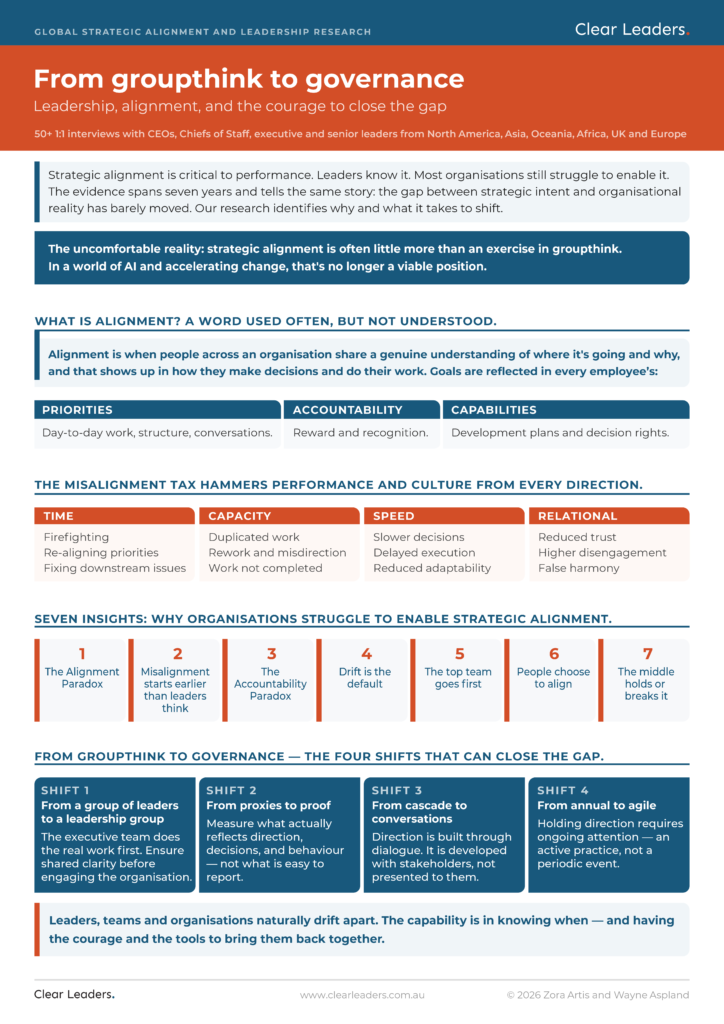
From Groupthink to Governance.
Why is alignment so challenged? What does closing the gap require?
To find out, we interviewed 55 senior leaders from five continents. CEOs, Chiefs of Staff and leaders in strategy, HR, operations and communication.
Our third strategic alignment study surfaces an uncomfortable truth. In most organisations, alignment is assumed rather than enabled. It’s an exercise in groupthink rather than a serious leadership discipline.
We need to rethink the way we enable alignment: from groupthink to governance. That requires four fundamental shifts:
- From a group of leaders to a leadership group
- From proxies to proof.
- From cascade to conversations.
- From annual to agile.
The full paper sets out what these shifts require in practice.
Our earlier reports
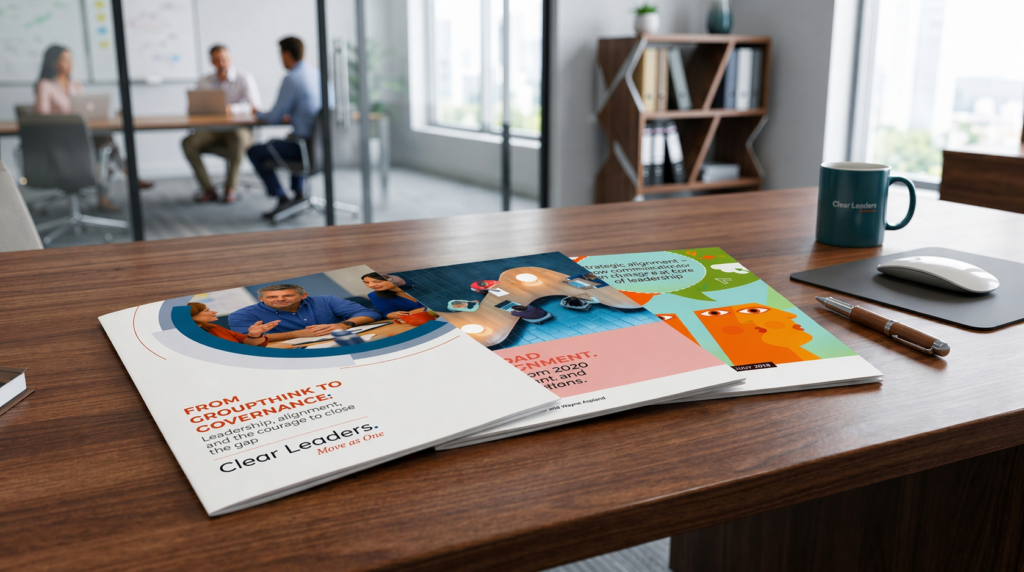
From Groupthink to Governance is our third proprietary research study into the power of alignment.
You can access the earlier reports here.
The Road to Alignment (2020):
- Lessons from 2020 for alignment and communication. Qualitative research with 27 senior communication leaders.
Strategic Alignment: How Communicators Can Change the Face of Leadership (2018):
- Global-first study of strategic alignment and the role of communication and leadership.
About alignment: frequently asked questions
Organisational alignment means everyone in a business – from the C-suite to the frontline – shares the same clarity, accountability and commitment to the organisation’s direction. It shows up as a visible connection between what leaders commit to and what actually gets delivered, between strategy and day-to-day work, and between what people say, do and believe.
Alignment is what lets an organisation move at pace and change course quickly… the ability to “Move as One™. Without it, organisations lose speed, trust and execution capacity even when the strategy itself is sound. 91% of leaders say strategic alignment is fundamental to their organisation’s goals, yet only 13% believe their own organisation is highly aligned.
The misalignment tax is the steady, often invisible drain on capacity, speed, time and relationships that organisations absorb when they aren’t genuinely aligned. It’s the cost of silos, duplicated effort, rework, slipping trust and stalled execution… problems many organisations treat as normal rather than as symptoms of a solvable alignment gap.
Misalignment is common. 91% of leaders say strategic alignment is fundamental to their goals, but only 13% believe their own organisation is highly aligned. Other measures tell the same story. Only 56% of leaders feel their executive team works effectively together, and just 27% of teams understand the strategic priorities and how their work contributes to them.
Agreement is people nodding along in a meeting. Alignment is those same people making consistent decisions and trade-offs once they’re back at their desks. Clear Leaders describes “agreement without alignment” as false consensus. In other words, commitments that sound settled in the room but quietly break down in practice and don’t actually shape how work gets done.
Zora Artis of Artis Advisory and Wayne Aspland have published three proprietary global studies on strategic alignment as part of their Clear Leaders research collaboration. The series began with Strategic Alignment: How Communicators Can Change the Face of Leadership (2018, 227 respondents), followed by The Road to Alignment (2020, 27 senior communication leaders), and From Groupthink to Governance (2026, 55 senior leader interviews across five continents).
It’s the third strategic alignment study from Zora Artis’ and Wayne Aspland’s Clear Leaders research collaboration. The report is based on interviews with 55 senior leaders (including CEOs and Chiefs of Staff) across five continents. The report examines why alignment stays elusive despite being a stated priority. It argues organisations need four shifts: from a group of leaders to a leadership group, from proxies to proof, from cascade to conversations, and from annual to agile.
Click the links to download the full From Groupthink to Governance report or its summary infographic. You can also access Zora’s and Wayne’s earlier reports at Strategic Alignment: How Communicators Can Change the Face of Leadership and The Road to Alignment.
Teams that think, work and act better, together. Organisations that Move as One™.